Friday, February 28, 2014

PTSD in Law Enforcement: FIREWALLS

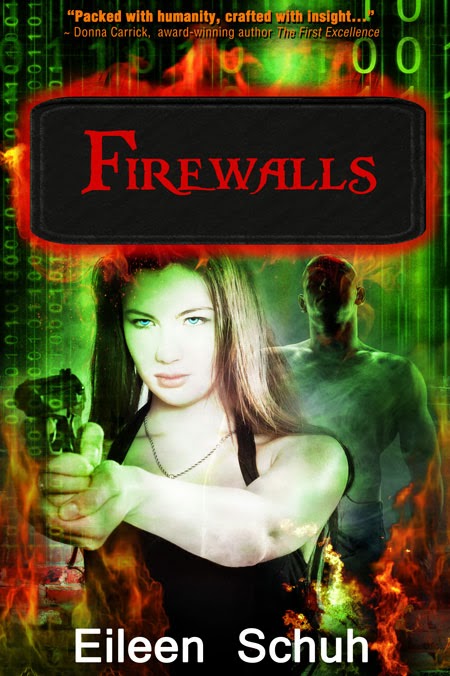
I didn't set out to write a novel about Post Traumatic Stress Disorder (PTSD). It's not as if I saw the recent spate of headlines and decided to show military and police organizations the proper way to deal with members with PTSD. No...it wasn't that.

In fact, I don't think the disorder was even mentioned by name in my new release FIREWALLS until the final few edits. In fact, the novel was written years ago--when PTSD was still a whisper.
http://mybook.to/firewalls

I set out to write a novel about a young woman whose violent childhood has scarred her. About her struggle with the past, the pain of the past, her inability to embrace her future. I believed my story to be about young Cst. Katrina Randal who is struggling to fulfill her dream of following her deceased father's footsteps into a law-enforcement career...and failing miserably because she's totally focusing on her past.

The first three-quarters of FIREWALLS is about Katrina's inability to accept the help that's being offered. She is angry and hurting and wants to stay that way. It seems unfathonable to her that she should laugh, or love, or achieve success while her brutally-murdered friend lies rotting in his grave. She wants justice, wants to assauge her guilt, wants...she doesn't know what she wants but she does know that she doesn't want to let go of the pain.

My story was to show the importance of relationships in her healing--how without her friends and co-workers standing with her, beside her, patiently waiting for her to heal, beckoning her into a brighter future--how without them, she'd have succumbed to the darkness.

Yes, there was professional help, but as Katrina herself noted, her psychiatrist could not cry with her (or for her), could not wrap her in his arms, could not be there at night for her when the nightmares visited--all the things she needed from someone to get to the other side of her personal hell.

That's what FIREWALLS was about...until I started editing. "That's not credible," I thought to myself  as her boss, Sgt. Kindle, once more put up with her dangerous behaviour, once more forgave her insubordination. "She's armed. She has a badge. She can't be allowed to do things like that."

About then, however, the PTSD headlines began climbing up the news ladders. That's when lawsuits against the RCMP were launched, when military suicides gained ink, when people began speaking out. That's when I realized why Sgt. Kindle did what he did.

Yes, to some extent he was making up for the fact that it was him in charge of the police operation that saw Katrina and his undercover officer, Shrug, experienced their trauma. He likely felt a personal debt to his two officers that had sacrificed their sanity for his operation. He likely felt the Alberta Police Force owed them, too. But more than that.

He seemed to know that letting these two wounded officers keep the jobs that were so important to their dreams, to their confidence, to their sense of self, was vital to their recovery. He saw the potential greatness in Katrina and Shrug. He knew they could contribute to their communities in a big way, should they overcome their emotional turmoil. He knew that by him accepting their behaviours he'd get in trouble with his superiors...and the media, but he did so anyways...so that his officers could recover.

With that realization, I decided I needed to officially diagnose my characters with PTSD. I needed to splash the name of that disorder throughout the pages and onto the back cover, so my readers could better understand not only PTSD but the officers that were in its clutches. They needed to be aware that it was PTSD causing my characters to 'act out of character' and that their illness merited the leniency of Sgt. Kindle and merited their leniency, too. 

PTSD is easiest to treat immediately following the trauma, but that is not always possible, such as in cases of unreported child abuse or out on the battlefield, or during uncover operations. PTSD does not necessarily have as dramatic an origin as Katrina's and Shrug's--few of us will ever witness a gang slaying. And unlike Shrug and Katrina, many PTSD sufferers harbor no guilt or sense of responsibility for the horrors that life handed them. The diagnosis of Post Traumatic Stress Disorder covers a vast array of circumstances, treatments vary, and individuals respond in their own ways to both the trauma and the treatment.

However, when a book club member told me she's been treated for PTSD and FIREWALLS was credible to her and enlightening, I realized my new release truly is more than just a story about an awesome crime-fighting lady with a painful past.

For more information about this novel check my press release.

FIREWALLS--special New Release limited-time price of $1.99. Paperback only $15.00. (Retail prices may vary.) Available in all popular eFormats from most online booksellers. Smashwords sells ebooks in a variety of formats--for your tablets, phones, eReaders and computers. Use Smashwords coupon code at check out to get the special price.

Click here to purchase or sample from Amazon eBook or paperback

Click here to purchase or sample from Smashwords eBook in various formats Use coupon code DP29T at check out to get for half-price.


http://mybook.to/firewalls


"Packed with humanity, crafted with insight."

"Schuh has created a character worthy of being called a hero."

"A tale of comfort and hope that we, too, can slay our own dragons." 

"A gritty, fast paced thriller"


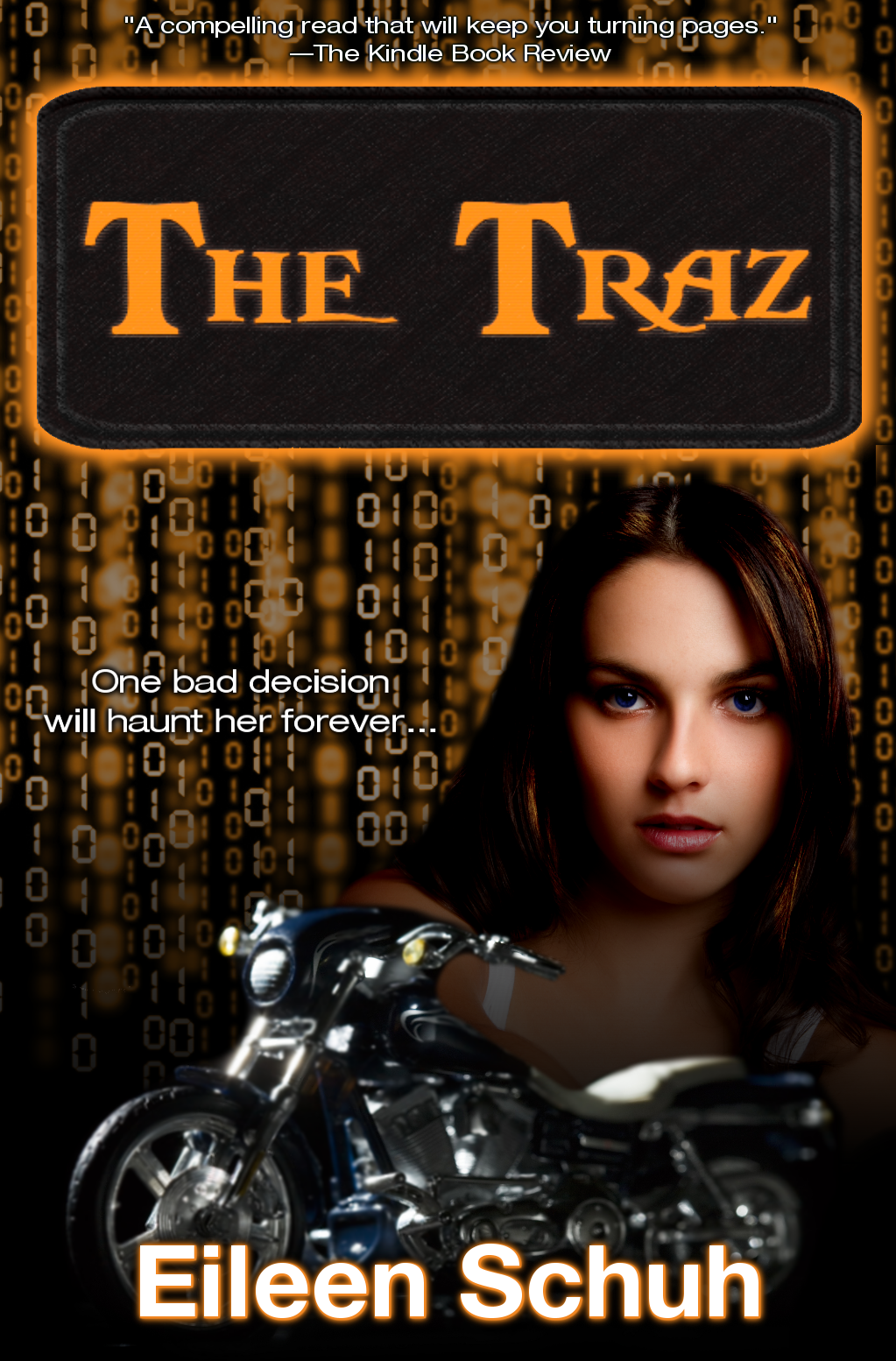
 FIREWALLS is Book III in the BackTracker Series. Book I THE TRAZ as well as THE TRAZ School Edition (with teaching guide)  are also on sale for a few more days for only 99₵ £0.77


viewBook.at/B007JW8RMA


Purchase THE TRAZ on Smashwords  -  Use Code: UX54T at checkout to get for 99₵

 Purchase THE TRAZ School Edition on Smashwords Use Code: PK68Y to get for 99₵


viewBook.at/B007JW8RMA


Also available in paperback

Saturday, February 01, 2014

The Drug Dog and I - Part III


With several bottles of rum lined up on the counter, my laptop sitting naked beside them under the glaring fluorescent lights, and the time coming up to 2 a.m. my body decided to do a hot flash—which normally, and in the time zone to which I’d become accustomed, would’ve been my usual 4 a.m. night sweat...in bed.

One cannot do anything discretely when being searched for illicit drugs so I just whipped off the poncho I had on which sent my hat and hair clips flying. I imagine sweating profusely isn’t the most innocent gesture one can make, but I had no control over that. I scrambled around on  the floor gathering up my barrettes and for lack of anywhere else to put them, shoved them in the back pocket of my jeans...

Throughout this ordeal, the officers were swabbing items and running with the swabs and sometimes the entire item to some lab (not the Chocolate Lab, the other kind of lab), in the back. About this time, one officer returned from behind the closed doors with a pair of my shorts.

“Why,” he demanded, “Are the back pockets in these sewn half-shut in the middle?”


What I wanted to say: They’re women’s pants, idiot. I’m lucky I even have pockets. Besides, what woman ever puts anything in their back pockets—that would make your butt look even bigger than it is!”

What I actually said: I have no idea. I didn’t know they were. 

 “Do you have anything in your pockets?”

“Only my hair clips...that I just put there.”

He stares at me and I realize he wants to see these hair clips so I dutifully lay the plastic golden clips on his counter. What else to do?

We were asked if we had phones on us. I said there was one in my luggage but I had none on me. (When I got home I discovered I’d taken the phone from my luggage and put it in my purse in anticipation of having to call for a shuttle bus to our hotel when we reached Edmonton. Ooops!)

When one more bottle of rum was unwrapped in the final suitcase and placed beside the others, it became painfully obvious that not only had we been negligent in properly declaring my ring—we hadn’t properly declared our Jamaican rum. Since the officers hadn’t found any drugs, would they justify their existence and the search by hitting on these two facts?

“This customs declaration form is a legal document,” he said, flicking his finger at the paperwork full of errors on which we had marked the maximum limits for both of us. “We need exact figures.”

What I wanted to say: While in Jamaica we learned that financial help from the Canadian Government, among other huge investments, had built the water treatment facility in Jamaica that allowed that country safe drinking water—to the point that even Caribbean cruise ships fill in their ports. Does it not make sense that that same Government allow Canadian tourists to further support this developing nation by purchasing a tad more than a mere $800.00 CDN during a two-week visit? Tourism, we learned, is Jamaica’s number one industry. Tourists enjoy re-distributing the world’s wealth by purchasing items such as rum, Red Stripe, rings, beach bags and dresses for the granddaughters. These purchases might cost the government a bit in taxes and the Canadian economy might take a miniscule hit, but overall is it not better than having all Canadian taxpayers, travellers or not, shell out money in the form of grants and donations? This way, the country is working for the money, the dollars spent are stimulating its economy, and everyone wins.

What I actually said: I see

“We understand that you are dealing with Jamaican dollars, American dollars and Canadian currency and exchange rates, but we need an estimate.”

What I wanted to say: Make up your mind—do you need exact figures or an estimate? Perhaps an exact estimate?


What I actually said: I see.

As they finished checking the last bag he ran his eyes over the rum purchases and pointed out that not only had we gone over our liquor limit, we had not included the price of the rum in our declaration. Nor the proper price of the ring and if we added in the beach bag, the T-shirts, the hats...

“We’re not concerned with what you did in Jamaica,” the other officer interrupted. “We’re only interested that you didn’t bring anything illegal back. If you smoked marijuana down there, we don’t care.”

What I wanted to say: Yeah, right. We already told you we don’t use. If we change our minds now will you come after us for lying? Or, perhaps, sir, you are wanting to justify the actions of your demonic Chocolate Lab.  If we say we smoked marijuana, you can write a little note that it was the suspects’ own marijuana use that set your dog off. 

What I actually said: We didn’t use marijuana. Never have, never will.

Back to the official who has counted up our rum and expenditures—the one who read all our receipts. “You are over your limits and we can do one of three things. We can make you pay duties and customs on all your purchases or, we can confiscate everything and it becomes the property of the crown or, we can let you go and use this opportunity to educate you."


What I wanted to say: I suggest it is your dog that need educating

What I actually said: nothing

“So, tonight we are letting you go.”

It was left to us to repack our bags, so much for me carefully laying out my pj’s for tonight and a clean set of clothes for tomorrow’s journey home to St. Paul. So much for knowing exactly where our morning drugs (the prescription ones) were. I heaved a sigh of relief, probably audible, when he slipped my laptop into its case.

It was wonderful to discover our friends had waited for us, eager perhaps, to hear our stories. Good stories that will be repeated time and again around the campfire as we sip Jamaican rum cream and roast marshmallows while savouring the colours of an ammolite ring flashing brilliantly in the firelight.
 ________________________________
The legalities:
Canadian and US Customs and border officials do not need search warrants, do not have to prove to anyone just cause for a search.

They can access all your digital devices without your permission, even insisting you give them your passowords

You do not have the right to contact and lawyer or have a lawyer present.

A Kinder Surprise is a large egg-shaped chocolate that contains a plastic yoke with a small toy inside.Why the yoke of one was one in my suitcase is anybody's guess.
Where my fictional drug smuggler will hide his joint: in the yoke of a Kinder Surprise.

The Drug Dog and I - Part III 
is brought to you by 
FIREWALLS
Mystery, Murder, Mayhem and Drug Dealin'

http://mybook.to/firewalls

Thursday, January 30, 2014

The Drug Dog and I - Part II


Our travel companions were waved from the baggage area through one door and we were hustled through another. It was a fairly large room  that at first glance kind of looked like a grocery checkout...except the people standing at the counters were in uniform and armed and there were no tills...and, come to think of it, no groceries. It wasn't like I could pick up a pack of gum on my way through.

“Have you been in recent contact with marijuana?” one official asked as we followed his beckoning and pushed our baggage cart to one of the counters.

"We just came from Jamaica,” I said. “Marijuana is everywhere, there. Hotel security tries selling it to you—“

“I know,” he interrupted. “I’ve been to Jamaica.”

What I wanted to say: Then why did you fricken ask that question?

What I actually said: Nothing

My husband carried on the conversation, explaining in more detail the offer he’d received while getting on the shuttle bus to the airport while I followed instructions and heaved the first suitcase up onto the counter. While men talk, the women work—as usual.

“Did you smoke anything while down there?” was the next question.

“We don’t use,” we answered in unison, me adding that we are actually quite anti-drug

 “What do you do for a living?”

Hubby answered first saying he was a housing contractor while I debated whether to say I ran the housing contracting office or to say I was a novelist. Both were true. I hoped to say nothing but, “And you?” was directed my way.

What I wanted to say: I write novels about gangs and drugs and undercover cops and just finished a 23-stop author tour to schools and libraries educating teens and the adults in their lives about the danger of involvement in the drug trade...and I volunteer for the RCMP.”

What I actually said: Novelist. 

“Were you near any cocaine while in Jamaica?” he asked.

What I wanted to say: Although Shrug, a cop character in my BackTracker series, learned all about the international drug trade during his four-year stint undercover with the fictional TRAZ biker gang, he never shared that intel with me so there are large gaps in my understanding. Why would anyone want to import marijuana to Canada from Jamaica when, from my understanding, the best mj in the world is just over the Rockies in the beautiful neighbouring Canadian province of B.C. And furthermore, it was not like mj was dirt cheap down there or something. I heard they were asking for $5.00 USD for one joint! How is it that I hear on the news about drug shipments being intercepted by police on the way from Canada to Mexico? From Mexico to Canada? From Toronto to Europe? From the UK to New York? I have this visual of flotillas of cocaine and marijuana endlessly traversing the oceans of the world waiting to be intercepted--

What I actually said: “Never saw any.”

We were asked about our customs declaration form and Alvin told him the story about the error with the ring. My computer was pulled out of its case and set aside. About then I decided I would buy another smaller computer just for travelling. Unlike regular cops, Border officials do not need search warrants and can search and/or confiscate whatever they wish without explanation or justification. If I were to lose my computer with all my writing...I’d die. I was somewhat comforted by the fact I had taken the time to back up everything before I left, but all the photos from the trip and the personal info on there. Border officials can even demand your passwords and get info your bank files, history—anything else they wish to peek at. Seeing someone manhandle my fuschia lace bra was invasive, but would be nothing compared to the violation I’d feel if someone got into my laptop. 

About then the ring in question was discovered in my change purse. Note to self: fictional drug smugglers ought not to hide their stash in change purses.

They were interested in our money, of which there was notably less than what we'd started out with two weeks ago and every receipt and bit of paper they could find. After uncovering the fourth "Comfort Pack" (blanket, earphones, ear plugs, eyeshades) that came with our upgraded airline seats, he asked, "Do they give these away, or what?"

What I wanted to say: Yes, actually they do. We did NOT steal them.
What Hubby said: Yes

Our Bubba Mugs, large insulated mugs for keeping beer and strawberry daiquiris cold on the beach, were pulled out and opened. I’d asked hubby to pack my sunglasses in the largest of the mugs. He had diligently wrapped each of the three pair in facial tissue (I guess he didn’t realize these are $3.00 sunglasses).  Each pair was unwrapped and examined. NOTE to self: Don’t have your bad guy hide his stash in a bubba mug, or a wallet...or a birthday card.

Items of interest to the Border Officials
I’d turned 50 (again) while in Jamaica (hence the ring) and the birthday card from my friends, which seemed to interest the guy. He pulled it from the envelope, shook the envelope, shook the card. Damned near sniffed it. Perhaps it confused him that some of my friends had written, “Happy 50th!” and others, (whom I like less) had written “Happy 59th! The ceramic souvenir picture frame that had come with the card seemed of concern, as well. 

Meanwhile the other officer who’d arrived to help with search, was pulling Jamaican rum from the various suitcases he was into and lining them up beside my laptop. We were getting mighty close to our liquor import limit—if not exceeding it.

Things were not looking good.
_________________________

The Drug Dog and I - Part II 
was brought to you by
FIREWALLS

http://mybook.to/firewalls
Drugs, Crime, Cops and PTSD

Monday, January 27, 2014

The Drug Dog and I - Part I


You know you are a crime writer when... the top-most thing on your mind when pulled over for a border security baggage search is to watch where the officers DON’T look so you know exactly where the smuggler in your next novel is going to stow his stash.

Yes, okay, all right. I probably did have a few other things on my mind during that search (like ‘OMG! He’s going to see my KY Jelly’ and ‘I can’t believe you’re actually touching my entire two weeks-worth of dirty panties!’) but none of it was likely what Canadian Border Security imagined I was thinking.

Of course in the presence of the law, trying to look innocent when one actually is, is difficult under most circumstances. Thus, when it’s 1 a.m. following a seven-hour flight home from a two-week vacation in Jamaica the task of keeping oneself from getting into even more trouble increases significantly. Especially if you are the kind of person I am—who enjoys being witty, handles stress with humour and lively conversation, and is notoriously dozy after midnight. My keen interest in crime, criminals, law enforcement...and the illicit drug trade didn’t help much in this case, either. I bit my tongue so often during the hour-long ordeal, it is still sore four days later.

Things started off not badly, the flight home from Jamaica was comfortable (thanks to upgraded seats) and quicker than expected (as noted by the flight attendant upon landing—although what that was due to wasn’t mentioned.) We came in on a huge jet, yet despite that fact the line moved through the cattle gates to the Canada Immigration and Customs kiosks fairly quickly. Our turn at the desk hit a bump when we discovered we couldn’t share the cost of my ammolite birthday ring under our exemptions—because, they said, we couldn’t share the ring. They waved us through  despite our error and I calculated I’d be snug in bed in about an hour if the baggage came through in timely manner.
My ammolite ring--a birthday gift from hubby

A dog barking off somewhere was my first clue things were other than usual. I couldn’t see the beast initially but after visiting the loo and re-joining hubby and the rest of flight #TS119 passengers, who were all staring sleepily at a baggage carousel that was not moving, the pooch  came into view.

Now I have a thing against Labrador Retrievers, which is in itself a story. It’s not that I’m afraid of them, in fact I’ve come to the conclusion the fact I’m not, is a large part of what created my Lab problems. I simply don’t respect these dogs that seem to assume I am there for them and their pleasure. Most of my problems rest with the Alpha dogs of this species but the puppy dogs of this species also annoy the "h" out of me. So when I discovered the barking was being emitted by a Chocolate Lab with more energy than Hurricane Katrina and who more than once broke free from it’s handler’s hold to whip around the baggage claim area with abandoned, I was not happy.

From past experience I know ignoring these dogs is not the right strategy (they don’t like being ignored and will escalate their behaviour until you MUST notice them). However, being as it was past the wee witching hour, I had little energy to expend on trying to keep my eyes on a chocolate whirling dervish. Watching the carousel which was still not moving, was more my speed.

True to past experience, my ignoring the critter drew him to my side—and then up on top of my baggage cart where he promptly knocked off one of my carry-ons. He then sat.

Now...if you know anything about law-enforcement dogs, sniffing and then sitting means they’ve smelled something. All these dogs are trained to track people and then some are cross-trained to sniff explosives and others to sniff drugs. They are taught to sit if they catch a whiff. From the very beginning I highly doubted that this Lab was seeking explosives.

“The dog likes your bag,” I said to hubby. The dog glanced behind me to its handler and upon some kind of signal took off after the green tennis ball she threw.

Did I mention I don’t like Chocolate Labs? I’m pretty sure this pup had developed a theory that if he sniffed something and sat, his trainer would toss a ball for him to fetch as a reward. I’m pretty sure he decided to test that theory on me—because, Labs don’t like me any more than I like them.

Anyways with the dog now gone, and the carousel still not moving, hubby decided it was a great time to get his jacket out of his carry-on (as in January, it is noticeable colder in our Alberta homeland than in Jamaica ) and then go to the washroom. In hindsight, the fact an official followed him into the washroom was a good follow-up clue to the dog clue and one that was highly predictive of what was about to happen.

In hindsight, hubby is very glad he needed only to use the urinal and not a cubicle. In hindsight, taking a jacket from the bag a drug dog has just pointed out and heading to the can with it was probably not the least suspicious thing a person could’ve done.

Just when he got back from the can, the carousel began moving and it wasn’t long before our priority luggage was on our cart and we were heading to the back room of Canadian Border Security at the Edmonton International Airport.

Part I of The Drug Dog and I is brought to you by:

FIREWALLS
a novel about drugs, gangs, cyberCrime and PTSD 

http://mybook.to/firewalls